
Modern businesses are operating in a more tangled and competitive environment than before, and honestly, keeping operations smooth and efficient matters a lot more now than it did earlier. In real life, organizations today are juggling huge data amounts, a bunch of operational departments , shifting customer expectations, plus markets that change fast , sometimes almost overnight.
So to respond to all that effectively, many enterprises are leaning toward intelligent digital solutions, which sounds obvious but really it’s become necessary.
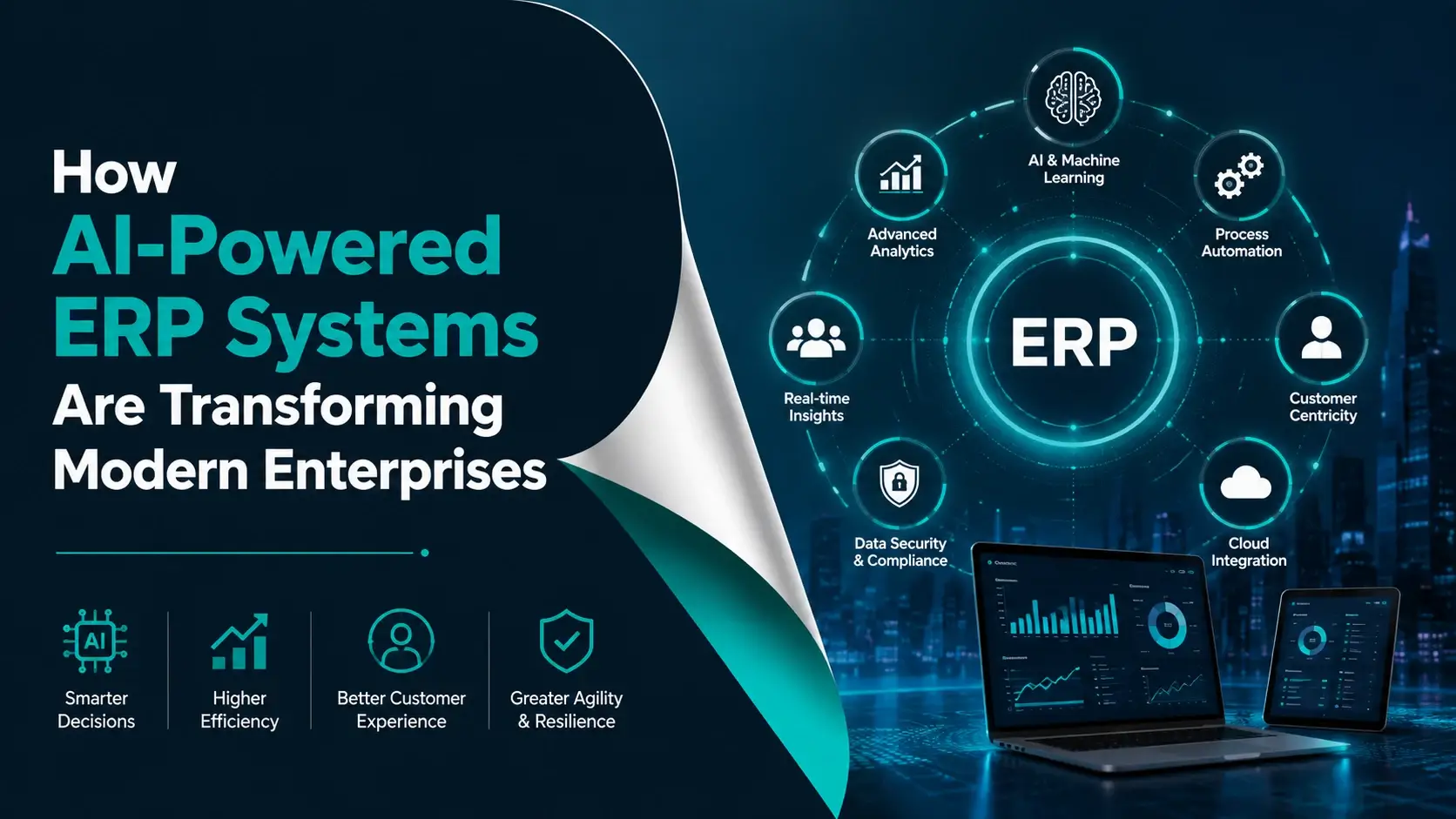
One of the biggest technologies that’s reshaping how enterprise operations work is Artificial Intelligence (AI). Once AI is connected with Enterprise Resource Planning (ERP) systems, it helps form smarter, faster, and highly automated business surroundings. Not just “automation for automation’s sake,” but better orchestration across different functions.
Historically, traditional ERP platforms mostly concentrated on bringing business operations under one roof—finance, inventory, human resources, procurement, and customer management. Still, today’s artificial intelligence ERP systems move beyond simple record keeping.
They enable predictive analytics, smart task execution, real time decision-making, and deeper operational visibility that supports productivity gains and scalability growth. In other words, the system doesn’t only store information, it helps people act on it.
As digital transformation keeps accelerating across many industries, enterprises are increasingly working with experienced erp software development partners, so they can build intelligent ERP solutions that fit their own operational needs instead of forcing everything into a generic template.
In this article, we’ll look at how AI-powered ERP systems are changing modern enterprises, including the key benefits, core features, where they’re used across industries, development considerations, and what future trends might look like.
What Is an AI-Powered ERP System?
An AI-powered ERP system i s a more advanced kind of enterprise software solution that sort of blends the usual ERP duties with AI technologies, like:
- machine learning,
- predictive analytics
- natural language processing, or NLP
- robotic process automation, sometimes just RPA
- intelligent data analytics
With these smart features, the platform can automate the repetitive chores, scrutinize business data, foresee what might happen next, and help people make more informed business calls.
And unlike conventional ERP platforms which mostly handle task flows and data storage, an AI driven ERP solution doesn’t just sit there— it keeps boosting operational intelligence and overall business efficiency.
Why Modern Enterprises Are Adopting AI-Powered ERP Systems
Businesses right now deal with a bunch of operational hurdles, like more complex data, and then the manual process inefficiencies that keep piling up, plus supply chain disruptions, not to mention rising operational costs and that slow decision making feeling. On top of that, customer demand fluctuations can really throw things off.
Most traditional ERP systems kind of struggle when business environments get more dynamic, especially when you need real time adaptability and predictive insights at the same time. With AI integration though, enterprises can push past those limits, because intelligent automation and data driven decision making become more available, and honestly more usable.
So naturally, many organizations are pouring resources into custom ERP software development to build scalable, and future-ready enterprise ecosystems, rather than sticking with something that cant keep up.




How AI Is Transforming ERP Systems
1. Intelligent Process Automation
One of the biggest perks with AI driven ERP systems is sort of, automation. In other words, AI can handle repetitive, time consuming business jobs like invoice processing, data entry, payroll management and inventory updates. It can also improve customer support workflows and even streamline procurement operations.
When Robotic Process Automation, the RPA kind, is built into ERP systems it cuts down on manual effort , reduces human mistakes and speeds up operations. This makes it so employees can spend more time on strategic, higher value work instead of being stuck on plain administrative routine stuff.
2. Predictive Analytics for Smarter Decision-Making
AI-powered ERP systems, basically chew through huge amounts of past plus live data and from that try to guess what might happen next in the business world. So predictive analytics really helps companies to look ahead at things like customer demand, inventory requirements, and sales trends.
It can also flag equipment maintenance needs, financial risks, even supply chain disruptions that could pop up later. With those kinds of hints, enterprises can start acting sooner rather than later and sharpen their strategic planning, rather than just react after the fact.
And now modern artificial intelligence ERP systems come with real time dashboards and “smarter” reporting tools, which makes it easier for teams to decide faster, and with less guesswork, all in a more accurate way.
3. Enhanced Supply Chain Management
Supply chain management is one of the most critical spaces where AI-powered ERP systems give real value, like you know. In practice AI helps the supply chain operate better by, predicting demand shifts in advance, optimizing the level of stock, keeping an eye on how vendors perform, plus spotting those operational bottlenecks before they get ugly, and also improving logistics planning overall.
On top of that, AI-enabled ERP platforms can surface likely disruptions early, before they turn into problems inside your actual day to day business operations. That way organizations tend to lift operational efficiency, while cutting down on needless costs, and delays too.
4. Improved Customer Relationship Management
Modern ERP systems that are tied in with AI tends to make the customer experience better, and also the relationship management feels more… deliberate, sort of. In practice, AI can dig through customer data to spot things like buying behavior, customer preferences, engagement patterns, service requirements, and even sales opportunities.
When it does this kind of analysis it helps a business provide more customized experiences, keep customers around longer, and adjust marketing strategies in a smarter way. And then there are AI-powered chatbots, plus virtual assistants, plugged right into the ERP systems they can really strengthen customer support operations.
Instead of waiting around, customers get help more quickly and the whole support workflow looks less complicated, in a way.
5. Real-Time Business Intelligence
Traditional ERP platforms usually give out fixed kind of reports, built from old records so its kinda static. On the other hand , AI-powered ERP systems give real-time business insight, with advanced analytics plus automated reporting as well.
In day to day use businesses can keep an eye on, operational effectiveness, overall financial strength, employee output, sales momentum, and inventory condition. When everything is visible in the moment, enterprises can react faster to shifting business situations, and even those market trends that change all the time.
6. Smarter Financial Management
AI is basically transforming how financial management gets done inside ERP ecosystems, you know, like it’s not just software anymore. AI-driven ERP systems can automate a bunch of routine tasks, such as financial forecasting, budget planning, expense tracking, fraud detection and even tax calculations. They can also help with compliance monitoring.
Meanwhile machine learning algorithms can spot weird financial behavior, or “atypical” spending patterns , and that tends to cut down on fraud risks. So overall, the process becomes more precise, the financial accuracy goes up, and enterprise risk management gets strengthened too.
7. Human Resource Optimization
AI-powered ERP platforms can really help streamline HR work, kind of like automating the daily grind while still making decisions smarter, in a way that feels intentional. Through intelligent workforce management, these systems often handle a lot of the routine stuff, and yes it makes workflows more smooth.
For HR teams , AI can assist with resume screening, and it can also do employee performance analysis. It can support workforce planning, attendance tracking, and even employee engagement analysis, depending on what’s enabled. And then there’s AI-driven analytics, which can help organizations forecast potential employee turnover and strengthen talent retention strategies.
Key Features of AI-Powered ERP Systems
Modern ERP solutions have a bunch of intelligent bits that, you know, make day to day enterprise operations run smoother.
- Machine Learning Algorithms, basically let the system learn from business data and then boost performance again and again, over time.
- Predictive Analytics brings future forecasts into focus and gives operational insights that are a bit more than just look back reports.
- AI Chatbots and Virtual Assistants help with employee support, and also with customer chats, which tends to reduce friction in real use.
- Natural Language Processing (NLP) lets people talk to ERP systems using conversational language, instead of hunting through menus.
- Intelligent Reporting Dashboards are set up for real time analytics and ongoing performance monitoring, so managers can see patterns sooner.
- Workflow Automation takes care of repetitive business tasks, approvals, and those small processes that usually slow everyone down
Industries Benefiting from AI-Powered ERP Systems
AI-driven ERP platforms are kind of reshaping various sectors, and yes it feels like everything is moving fast.
- Manufacturing: You can boost stock handling, add predictive maintenance, and also tune production scheduling.
- Healthcare: It helps with patient management, smarter resource distribution, and compliance monitoring that stays consistent.
- Retail and eCommerce: They make customer journeys smoother, improve inventory forecasting, and strengthen sales analytics.
- Logistics and Supply Chain: Better shipment visibility, route optimization, and warehouse operations come out of it.
- Finance: You get support for fraud detection, financial planning, plus risk analysis that can be more proactive.
Importance of Choosing the Right ERP Development Partner
Building smart ERP systems really needs a lot of know how across AI technologies, enterprise architecture, and business process management, in a kind of detailed way. There are experienced ERP software development partners who tend to help businesses by,
- Designing scalable ERP structures
- Weaving AI technologies into the workflows effectively
- Making sure enterprise-grade security is in place
- Improving system performance and stability
- Customizing ERP functionalities to fit real requirements
- Supporting long term scalability without drama
Picking the right development partner is essential for a smooth ERP rollout and that broader digital transformation push.
Challenges in AI-Powered ERP Implementation
Despite its potential benefits, rolling out AI-driven ERP systems can come with a few hiccups, here and there.
- High initial investment: These advanced ERP arrangements usually need a notable upfront spend, for development and supporting infrastructure and such.
- Data integration complexity: Enterprises often find it difficult to harmonize data from older or legacy systems into today’s ERP environments, it’s not always straightforward.
- Employee training requirements: There’s also the matter of teaching staff to adjust to AI-guided workflows and related technologies, otherwise adoption stalls.
- Data security and compliance: Since ERP platforms handle sensitive corporate information, they must lean on strong cybersecurity safeguards, plus the usual compliance duties.
Future of AI in ERP Systems
The future of ERP technology is going to be a lot more powered by artificial intelligence, and also by this intelligent automation stuff, ya know. In the middle of what’s coming next, you’ll see things like hyperautomation showing up more and more, then AI-driven predictive operations, and maybe even voice-enabled ERP systems that respond like a human kind of.
Another angle is autonomous supply chains, plus AI-powered business assistants that help with decisions. On top of that, cloud-native ERP ecosystems will keep growing, along with advanced real-time analytics.
And as more enterprises keep pushing through their digital transformation strategies, the AI-powered ERP platforms are becoming sort of the centerpiece for intelligent business management , not just another “nice to have” anymore.
Why Businesses Invest in Custom ERP Development
Every organization has its own operational workflows, kind of distinct in how things roll day to day, and also different business aims. That is why a lot of enterprises put their money into custom ERP software development, not just keep leaning only on generic ERP platforms.
With custom ERP solutions you often get more flexibility than expected, plus stronger scalability when the business grows, also industry-specific functionality that actually fits the domain. On top of that, there are smoother third-party integrations and overall operational efficiency tends to improve in a measurable way.
When companies build a customized ERP ecosystem, it becomes easier to line up the technology foundation with long-term growth goals, and not have to keep fighting the system later.
Conclusion
AI-powered ERP systems are kind of, i mean really changing the way most modern companies run day to day operations, sift through data, and basically decide where to go next. When artificial intelligence is plugged into the real enterprise work, companies can automate tasks, smooth out operational efficiency, sharpen the whole customer journey, and pull out predictive clues they would not see otherwise.
Like in supply chain management and financial planning, all the way to HR fine tuning and real time analytics, AI-Powered ERP Systems are reshaping the broader enterprise landscape across different industries.
And yes, when organizations work with solid, experienced ERP software development partners they can assemble smarter, scalable ERP platforms that fit their actual operating model, and also match longer term digital transformation aims.
As businesses keep evolving in this data heavy economy, putting money into custom ERP software development will become more and more necessary for staying competitive, moving quickly, and supporting sustainable growth.