


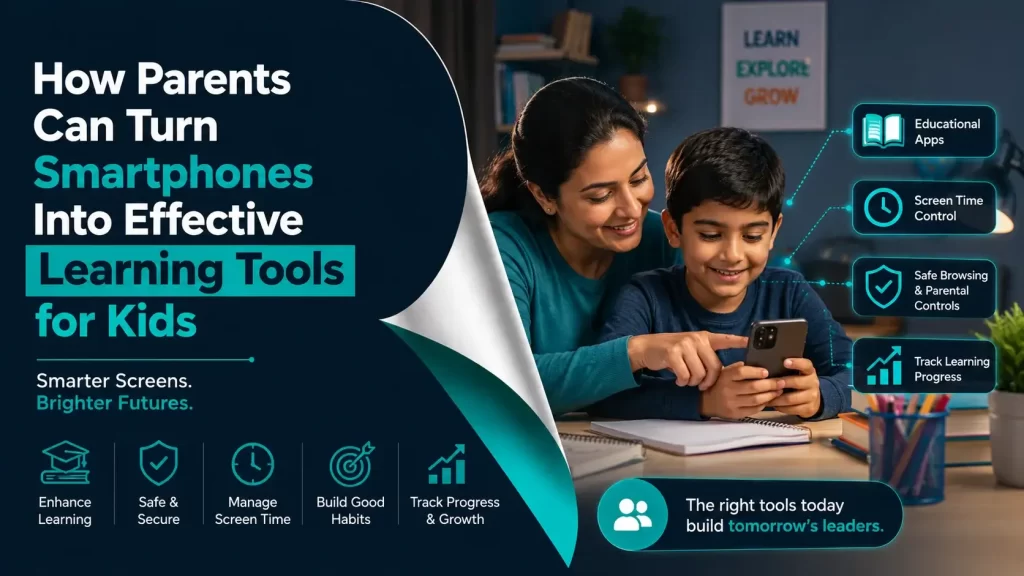
Smartphones are a big part of kids’ daily lives. Many parents worry that phones distract children from learning. But when used intentionally, smartphones can become powerful learning tools. They can help children develop skills in reading, math, science, and creativity.
Smartphones can also teach responsibility, like managing time and understanding rules of the internet. Parents play a key role by guiding app usage, monitoring progress, and setting clear limits. Combining online learning with real-world activities ensures that children retain knowledge and stay engaged.
Structured smartphone use encourages problem-solving, critical thinking, and curiosity. With careful guidance, smartphones can support both academic growth and life skills, turning screen time into a productive, educational experience.
Set Clear Limits and Expectations
Children need rules to avoid overuse or distractions. Smartphones without limits can lead to excessive gaming or social media use. Parents should:
- Set daily time limits for learning activities.
- Explain the purpose of these limits to children.
- Keep phones out of bedrooms at night.
- Monitor usage to ensure learning goals are being met.
Clear expectations help children understand the balance between learning and entertainment. Regular discussions about smartphone use also teach responsibility.
Select the Right Learning Apps
Not all apps are educational. Parents should choose apps that are safe and effective for their child’s age. Look for apps that:
- Encourage problem-solving and critical thinking.
- Improve reading, writing, or math skills.
- Introduce science concepts and experiments.
- Offer coding, music, or creative tools to explore new interests.
Testing apps before your child uses them ensures safety and quality. Encouraging children to explore topics they enjoy makes learning more engaging.
Support Reading and Language Skills
Smartphones provide access to e-books, audiobooks, and interactive reading apps. These tools help improve vocabulary, comprehension, and reading habits. Parents can:
- Encourage children to summarize stories or write notes digitally.
- Ask questions about the content to improve understanding.
- Track reading progress through app features.
Combining digital reading with traditional books strengthens language skills and keeps children engaged in multiple formats.
Strengthen Math and Problem-Solving Skills
Math apps often use games and challenges to teach numbers, logic, and problem-solving. Children can learn at their own pace and revisit difficult concepts. Parents should encourage discussion about how problems are solved.
Real-world practice, such as measuring ingredients while cooking or budgeting pocket money, reinforces learning. This approach helps children connect abstract math concepts to everyday life.
Encourage Creativity
Smartphones can support creative learning through apps for drawing, music, video creation, or coding. Children can:
- Experiment with digital art and animations.
- Compose music or record storytelling projects.
- Create simple coding projects or games.
Creative activities build problem-solving skills and persistence. They also allow children to express themselves and gain a sense of accomplishment.
Explore Science and Technology
Many apps provide interactive lessons in science, technology, and engineering. Children can explore ecosystems, space, chemical reactions, and simple machines safely. Parents can guide discussions around observations to deepen understanding.
Smartphones can also spark an interest in technology itself. Learning how devices work or attempting small repairs can be educational. For example, parents may need services like Electronics repair in Aventura, FL if a device malfunctions, showing children that technology requires care and maintenance.
Teach Online Safety
Smartphones connect children to a vast online world. Teaching them safe habits is essential. Parents should explain:
- How to protect personal information.
- How to identify scams or unsafe content.
- The importance of respecting others online.
Following rules of the internet helps children navigate safely. Open communication about online experiences ensures children feel comfortable asking for help when needed.
Combine Learning With Real-World Experiences
Smartphones work best when learning extends beyond the screen. Parents can encourage children to apply what they learn through real-life activities. Examples include:
- Conducting simple experiments at home.
- Observing nature and recording findings in a digital journal.
- Practicing budgeting or planning using apps.
Connecting online lessons with hands-on experiences reinforces knowledge and makes learning meaningful.
Encourage Social Learning and Collaboration
Some educational apps allow children to learn with friends or peers through challenges, quizzes, or group projects. This kind of social learning teaches teamwork, communication, and leadership.
Parents should ensure online interactions remain safe and constructive. Children also benefit from sharing digital projects or ideas with family members, which encourages discussion and reflection.
Track Progress and Encourage Reflection
Setting routines and tracking progress keeps smartphone learning effective. Parents can:
- Review app achievements and completed lessons.
- Celebrate milestones and encourage goal-setting.
- Adjust app usage based on progress or interest.
This approach teaches self-assessment and motivation while ensuring that smartphones remain a learning tool.
Support Device Maintenance
A well-functioning device is essential for uninterrupted learning. Parents should teach children basic care habits and know where to get professional support if needed.
Reliable services like Cell Phone Repair Services in West Hialeah, FL ensure devices are safe and functional. Understanding how to maintain technology encourages responsibility and problem-solving.
Teach Time Management and Responsibility
Using smartphones for learning also teaches time management. Parents can encourage children to:
- Set personal goals for study sessions.
- Use reminder apps to complete tasks.
- Track time spent on educational vs. recreational apps.
These habits help children become independent learners and develop organizational skills useful beyond screen time.
Encourage Reflection and Goal-Setting
Reflection is key to learning. Parents can encourage children to:
- Write digital journals about what they learned.
- Set weekly or monthly learning goals using apps.
- Discuss successes and challenges to improve skills.
Reflection builds critical thinking, helps children take ownership of learning, and makes smartphone use more intentional.
Final Thoughts
Smartphones can be more than distractions. With careful guidance, children can use them to improve reading, math, creativity, and science skills while learning responsibility and digital safety.
Parents set the tone by establishing limits, selecting appropriate apps, and connecting online lessons to real-world experiences. Tracking progress and maintaining devices ensures uninterrupted learning.
By approaching smartphone use intentionally, parents can turn screens into productive tools that support growth, curiosity, and lifelong learning.